

Shame
SAD and shagging

The majority of this post is free, there are some explicit scenes beyond the paywall partially because I’m not quite brave enough to have them totally public, but mainly because it’s not just about me.
In my twenties I had a recurring dream. It wasn’t always the same, exactly, but the core plot never deviated. I had buried a body and it was about to be discovered.
The locations varied. Inside the wall of a house that was being sold, a Neolithic tomb, the foundations of a football pitch. I was never aware of who exactly I had murdered. I only knew that I had done something unforgiveable and was about to be discovered.
*
I’ve heard writers say they have to write towards the pain. If it hurts, that’s where the good stuff is. I do that, sure, but my preference is to write towards the shame.
I know that’s where I’m going to find the good stuff. Because I know what we are ashamed of is what we hide. We don’t hide our pain, not really, we want others to know our pain so that we feel less alone. Shame is much more delicious. Everybody hurts. Hurting together can be cathartic. Shame, on the other hand is what we don’t really want people to know.
I have a particular love for non-fiction/auto-fiction/novels with a narrator that digs into the inner workings of their psyche. Say the disgusting thing, say the shameful thing.
I want to know what’s happening in other people’s heads. Perhaps this comes from my own shame, my own sense that there’s something not quite right about me.
*
We are in the season of inadequacy, of SAD. Some blame the lack of light, personally, I blame advertising.
These months of rejuvenation, even resurrection, framed as a way to build ourselves back to productivity. How about a reframe?
These months of uselessness, of mess, of clutter, of sleeping more than necessary. These months that do not rebuild us, no clear rest and recuperation, you don’t come out feeling stronger. These may not be months, they may be days. They are not fallow periods, ready to spring forth new energy and creativity. They are waste, they are tiring but nothing gets done, you feel neither rested nor creative.
Coming up to Christmas, we’re encouraged to indulge in excess, and now that we’re in January, we’re told we’ve overindulged, to buy fitness equipment to atone for our bad behaviour.
Ah, it’s so predictable, so impossible to avoid.
Shame makes you easy to manipulate. Why do you think the Catholic church loves it so much? We pay for our sins. Quite literally, indulgences in Catholicism are a way to mitigate your sins. You may know the term from the middle ages, when the abuse of said indulgences involved people giving money to the church to get themselves into heaven (more or less, I’m not a history book) and this contributed to the reformation. There’s still a collection basket at mass, just saying.
Shame is different from guilt. Guilt concerns a person’s feelings towards something they have done/thought, etc. Shame goes deeper. It’s the difference between doing something wrong and feeling bad about it VS feeling like you, as a person, are inherently wrong.
I’ve always had a suspicion that I was wrong. Something that seemed to grow as I did, like a tapeworm. I grew up in a rural Catholic area, so it’s hardly a surprise that shame was one of my formative emotions. Shame is one of the tools of control so effectively used in Ireland by the church for the last few centuries. We were taught to be ashamed of our bodies, to keep private parts private, no sex before marriage, a woman’s desire being the cause of the downfall of man.
Growing up as a woman in Ireland (in the 90s, but also early, possibly also later): your body, your desire, your self is shameful.
*
Animals do bad things. They scratch and bite and hurt and torment. They also do incredible things, commit acts of undeniable care and bravery. Studies suggest animals experience guilt alongside other emotions, but while I can’t know for sure, but I don’t think they live with the weight of guilt and wrongness that so many people do.
Do animals feel shame? We can all picture the dog groveling over a pair of shredded slippers. However, that exhibit of what we interpret as shame, is more like fear. It’s a submission to avoid punishment. Once you’ve picked up the fragments of memory foam and are in a good mood again, your dog is not beating themselves up for their abysmal behaviour.
This is not a new question. Ancient philosophers asked whether people and animas were distinct in their emotional capacities.
We know now that our emotions are strongly influenced by our biology, by hormones, by brain structure. Things that we share with animals.
Criticisms of people anthropomorphizing animals in the sense that animals experience emotions, include us seeing our own emotions in animals when that behaviour is driven by survival instincts. This implies that our own emotions are not influenced by instincts.
Jane Goodall said that chimps experience the same range of emotions as humans. She noted them exhibiting signs of embarrassment, but this is different from shame.
Is it the sense of self that separates the animal from the human? Chimpanzees spend hours grooming each other, and they have no concept of private parts. Chimpanzees do have a sense of self, though not as sophisticated as human’s.
Are we back in the Garden? Adam and Eve, red-faced with the mortification of it all, making knickers out of palm leaves.
Animals, in all likelihood, feel guilt, as they feel a range of emotions, though until AI technology advances cross-species communication and we see our first mammal psychoanalyst we may never truly know if they feel shame.
What I will presume (though may well be proven wrong in the future), is that the crippling shame that many people carry, a sense of being innately wrong, is not something animals feel. As people, we hold ourselves to the standard of society, but a failure to live up to unrealistic expectations fills us with shame. This is not to say we should live in a state of nature, but to remove the disconnect, to seek grace.
*
I’m trying to teach my son that even though one of our cats occasionally scratches him, she still loves him. I mean loves in the way a cat loves (or what we know about that, anyway), in that she will sleep on his lap, come to him for reassurance, will rub against him if he’s upset. We are her family, the only one she knows, despite the species difference.
I want him to understand that just because someone does something bad doesn’t mean they are bad. Mainly, I want him to know that he may do bad things without being inherently bad. Yes, he should feel guilty if he does something that causes someone pain. No, he shouldn’t feel shame.
I try to use the animal world in my parenting, because it’s where I find sense. I have endless compassion for my child, my cat, and yet, at some point I lost that compassion for myself, if I ever had it at all.
*
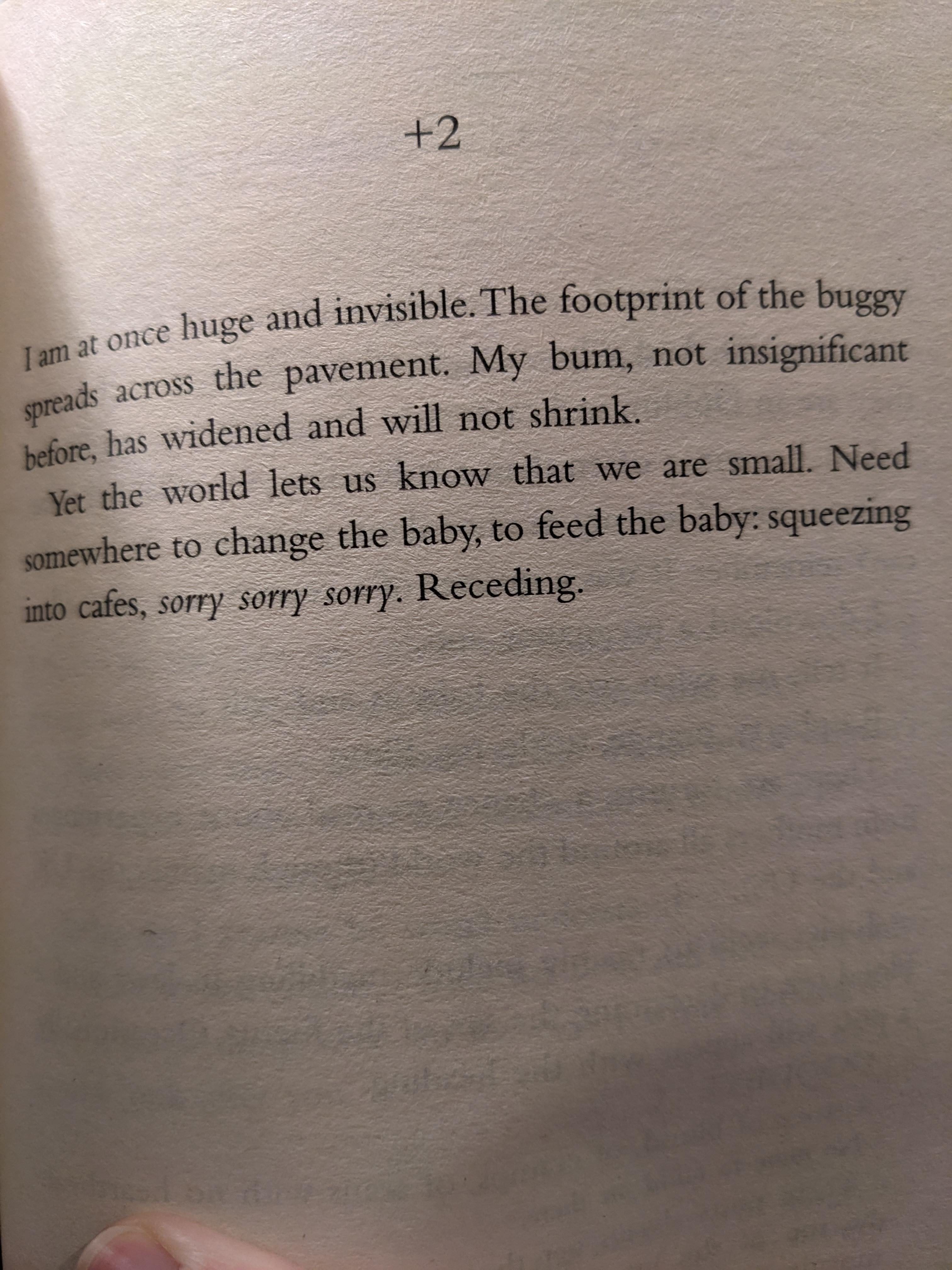
My partner is always telling me to stop saying sorry. I can’t seem to. I apologise needlessly, better safe than sorry.
There seems to be so many sources of shame. Shame in my mothering, that I’m never doing enough, that I have made such flawed decisions, that anyone would be a better mother than me. Shame in my body, the state of it, how poorly I treat it, how it just never seems to look or work how I want it to. Shame in never saying the right thing. The books not written, the friends not made, because I was holding back, desperately afraid I’d say the wrong thing. And when I did speak, and inevitably say the wrong thing? I would use that as proof that I should shut up.
I’ve always believe I was doing it wrong. Life in general, I mean. Perhaps it’s due to my slight tendency to say the wrong thing, do the wrong thing, to be perceived as a bit weird.
When my mother and grandmother read my book Milk, their reactions were similar.
One said: ‘well you didn’t leave anything out.’
The other: ‘well, you can’t take anything back.’
Clearly, I’m not known for my subtlety. Shameless, so I am! No, I stretch towards sharing this shame, but that doesn’t mean I don’t feel it. Don’t we all? (apparently we don’t all). This shame is why I write so openly. Why I recoil at having my writing called brave. The feeling that being called brave is really someone saying ‘Jesus I wouldn’t do that’.
In my writing, in my life in general, I want to publicise the shame. Because by the very nature of being a human animal, my behaviour, my thoughts, are natural.
Am I not human? Am I not an animal? Is this reaction not, in some way, normal?
*
When the dream that I had hidden a dead body became so frequent as to be disrupting my sleep, I did something I’ve never done before, I googled what my dream might mean. Not in a ‘what is god trying to say to me through my dreams’ way, but what might my mind be trying to tell me in my sleep?
The answer came quickly: shame. I was ashamed of something and afraid of being discovered.
Was I hiding anything at the time? Of course I was, I was in my early twenties. I was avoiding falling in love despite it being too late, I was shoving myself into various jobs that never fit, I was pretending things that happened drunk didn’t happen at all. That’s before considering what we bring with us from childhood.
Did I realise that the shame itself was the problem? Of course not! I thought I was the problem, and if only I could change, the shame, and the dreams, would go.
There’s nothing more natural than our bodies. These bodies we’ve been taught to hate. When I became a mother, my body not only changed, it failed. I had complications and an emergency c-section, my baby wasn’t as nourished as he should have been. I was ashamed of the failure of my body. This hunk of flesh, that never looked how I wanted it to, I at least hoped may do its job. For the next few years I focused on recovery and caring for my baby. I stopped viewing my body as a vehicle for pleasure, assuming this had been a problem, a vice. My body became purely functional as I strived towards a semblance of health. It was the pandemic, I was in a failing marriage, and I was a new mother. Shame in my body didn’t feature much, as I ignored how I looked, living in stretchy pants and comfortable shirt. I put every part of myself on the page, but would dodge mirrors and photos. I didn’t post selfies online, or send them to friends, I hid my physical self the best I could.
Only a generation ago, when women gave birth, they had to be ‘churched’ before rejoining the community, resuming marital and domestic duties. A woman must be purified from birth.
It’s worth noting that breastfeeding rates in Ireland are some of the lowest in Europe, and that one of the reasons given for this is embarrassment. Breastfeeding in public, while more common now, was for a long time putting yourself at risk of rude comments if not aggression.
The female body changes massively in adolescence, pregnancy, and menopause, not to mention the cyclical changes on a month to month basis. Riding these waves becomes a part of our daily life, and yet we’re not supposed to talk about them. They’re private, reasons to be embarrassed, and there’s a vague undertone that if we do admit to the difficulties hormonal fluctuations can cause we’re letting the side down. We should be able to bounce back like a man.
Sexual desire can be tied to these hormonal changes. I don’t know many women who were eager to get back to sex after birth, and yet we’re told at the 6 week check up we’re ok to have sex again.
Finding a way back to desire after becoming a mother isn’t a straightforward path for everyone. These soft parts of my body, where the last hands that touched them were those of medically trained strangers. A body wound into caring, leaking and shifting and bruised.
When the pain fades, the hormones settle, and we might dare to want again, what are we left with?
My body was so changed, so wrapped in the associations of surgery, of vulnerability, of meat. It felt like I’d never find my way back to feeling sexy, even if it were just me, alone, without the awareness of how my body may be viewed. But that shame was never far away, how can it be? Raised the way we are to view ourselves as objects, to think of our worth in terms of fuckability. I didn’t know what to worry about first, how I looked, or how I felt.
